Wide Sargasso Sea at 50 by Unknown
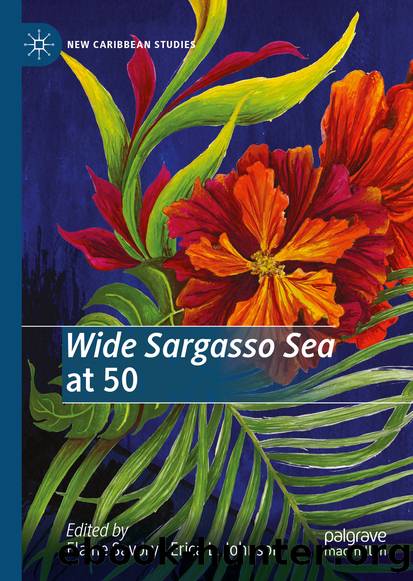
Author:Unknown
Language: eng
Format: epub
ISBN: 9783030282233
Publisher: Springer International Publishing
Before, After, and Beyond Windrush
Arriving in England in 1907, Rhys preceded emigrants such as Una Marson, Claude McKay, C. L. R. James, George Lamming, and Wilson Harris by decades. Her writing participates in a circuitous and relational modernism that extends from the 1920s and 1930s through the 1960s. It includes Marson, McKay, and James in an early transatlantic Caribbean modernism developed in counterpoint to the Anglo/European/US modernism of the period.5 Experiencing the exile so often considered a requirement for modernist writers, they created innovative, experimental fiction and poetry that broke with conventions of Standard English, incorporated blues and jazz, reflected on modernist visual aesthetics, and portrayed the interwar years from the sharply illuminating perspectives of colonial outsiders.
Later émigrés of the Windrush generation, such as George Lamming, Sam Selvon, and Harris, have been credited with inaugurating Caribbean modernism. And critics have read their metropolitan novels in dialogue with Anglo/European/US modernists such as T. S. Eliot, William Faulkner, and James Joyce.6 However, these writers of the 1950s also looked back to the interwar Caribbean modernists. For example, Lammingâs writing in The Emigrants , published in 1954, echoes scenes in Rhysâs Voyage in the Dark, published 20 years before. In a passage reflecting on the novel as a genre, Lammingâs narrator comes close to quoting the last lines of Voyage, gesturing to Rhys while vowing to âstart all over again ⦠start all over? ⦠againâ¦â (14). Portraying the perceptions of new arrivals as they journey by train to London, Lamming seems again to pay homage to Rhys, evoking the trainâs rhythms in a collage of voices and advertisements for Ponds cold cream, razor blades, paint, and insecticide. The lengthy passage recalls Anna Morganâs ironic commentaries on Bourneâs Cocoa and especially the streaming interior monologue conveying her perceptions, intercut with her voice and that of her stepmother, as she views England for the first time through a train window: âThis is England, Hester said and I watched it through the train-window divided into squares like pocket-handkerchiefs; a small tidy look it had everywhere fenced off from everywhere elseâwhat are those thingsâthose are haystacksâoh those are haystacksâI had read about England ever since I could readâsmaller meaner everything is never mindââ¦â (17). Lammingâs arrival in England along with others of the Windrush generation created, in turn, a more collective âWest Indianâ cultural identity for writers and artists. Theirs was an identity different from, yet pioneered by, the experiences of earlier emigrants, including Rhys.
Recalling that Kenneth Ramchand described Voyage in the Dark as âour first novel of Negritudeâ (3), and considering Claude McKayâs role in sparking that movement, it also seems important to at least mention the relational networks generating transatlantic Anglophone and Francophone modernisms. These would include the Harlem Renaissance and the surrealism and environmentalism of Aimé and Suzanne Césaire. And given the post-slavery plantation setting of Wide Sargasso Sea, the possibility of a trans-American plantation modernism linking Rhys with writers such as William Faulkner and Jean Toomer also emerges. Though we may not
Download
This site does not store any files on its server. We only index and link to content provided by other sites. Please contact the content providers to delete copyright contents if any and email us, we'll remove relevant links or contents immediately.
The Fine Print (Dreamland Billionaires Book 1) by Lauren Asher(2550)
Fury of Magnus by Graham McNeill(2443)
The Last House on Needless Street by Catriona Ward(2387)
The Rose Code by Kate Quinn(2195)
A Little Life: A Novel by Hanya Yanagihara(2120)
The God of the Woods by Liz Moore(1919)
Malibu Rising by Taylor Jenkins Reid(1914)
Luster by Raven Leilani(1898)
Transcendent Kingdom by Yaa Gyasi(1853)
Moonflower Murders by Anthony Horowitz(1842)
The Lost Book of the White (The Eldest Curses) by Cassandra Clare & Wesley Chu(1688)
This Changes Everything by Unknown(1499)
The Midwife Murders by James Patterson & Richard Dilallo(1484)
The New Wilderness by Diane Cook(1439)
The Lying Life of Adults by Elena Ferrante(1430)
Wandering in Strange Lands by Morgan Jerkins(1419)
Written in the Stars by Alexandria Bellefleur(1400)
Ambition and Desire: The Dangerous Life of Josephine Bonaparte by Kate Williams(1384)
The Lying Life of Adults by Elena Ferrante;(1308)
